Choosing the right sectional sofa manufacturer involves more than comparing prices or browsing attractive product photos. China offers a wide range of furniture suppliers, from large production facilities to smaller specialists with flexible designs. Their capabilities, materials, and service levels can differ considerably. A comfortable sofa starts with sound construction.
This guide to the Top 10 Sectional Sofa Manufacturers in China introduces companies worth researching and explains what buyers can compare. It considers product range, customization options, upholstery choices, frame construction, quality-control practices, and export support. These details can help importers, retailers, and project buyers build a more useful shortlist. Small details matter.
A manufacturer’s website alone cannot confirm how a sofa performs in daily use. Request current specifications, fabric samples, production details, and clear information about inspection procedures before making a decision. Where possible, review finished-product photos and discuss packaging and delivery requirements. No shortlist is perfect, and a supplier that suits one project may not suit another. The profiles below are starting points, not endorsements. Verify each company’s current capabilities directly, and weigh practical evidence alongside presentation.
China’s sectional-sofa industry draws on a broad furniture-making base, with suppliers for timber frames, steel mechanisms, foam, fabric, and leather often working across different regions. The National Bureau of Statistics reported that China’s furniture manufacturers above designated size recorded 655.7 billion yuan in revenue in 2023. That figure covers furniture overall, not sectional sofas alone. Details matter.
China Customs data put exports of furniture and parts at roughly US$56 billion in 2023. This broad category signals export capacity, but it does not show how many modular sofas were shipped. Buyers should check factory capability directly: ask whether corner units, chaise sections, and connectors are made in-house or sourced from partners. A sectional may look simple in a showroom. Its joints tell another story.
Production strength does not guarantee consistent quality. Request dimensional tolerances, frame materials, foam density, and fabric abrasion results, then compare them with a finished sample. Verify how packaging protects projecting corners and whether modules fit through standard doorways. A small measurement error can make a sofa difficult to install. I would also treat quoted lead times cautiously; peak-season schedules and custom upholstery can change them.
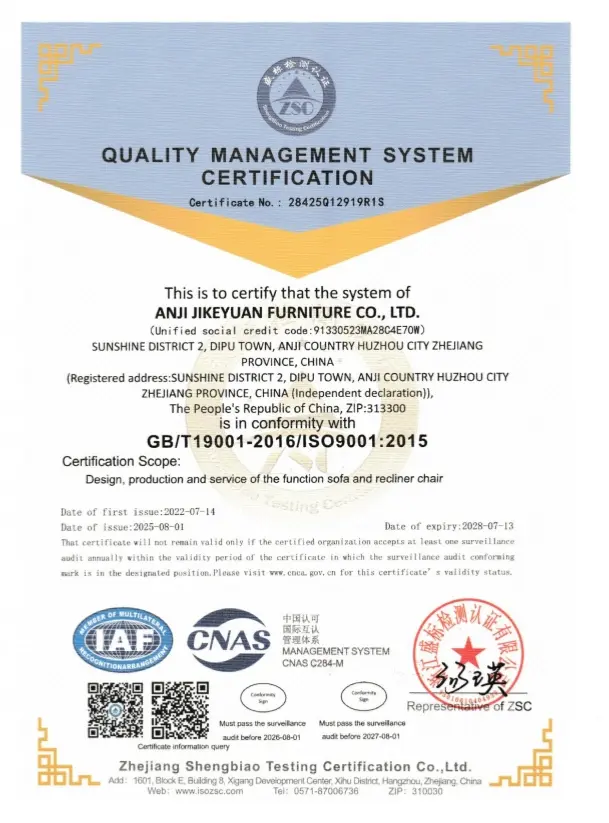
Selecting a sectional sofa manufacturer in China takes more than comparing catalog photos and quoted prices. Start with construction details: ask about frame materials, joint methods, foam density, suspension type, and fabric abrasion data. Specific answers matter. A factory that explains how seat modules connect and provides dimensioned drawings makes configuration checks easier. Request a fabric swatch and, where possible, inspect a finished unit under ordinary room lighting. Color shifts happen.
Assess production consistency, not just one attractive sample. Ask how incoming fabric, stitching, cushion dimensions, and final packing are checked. Request recent inspection records or a live walkthrough of the relevant workshop; verify details against the written quotation. Clarify minimum order quantities, lead times, spare-cover availability, packaging protection, and responsibility for freight damage. These details shape the real landed cost. A low unit price can hide gaps.
Communication is another practical test. Send a simple room layout with door widths, lift access, and preferred module sizes, then compare the response with your requirements. Clear questions and revisions suggest stronger project control, though they cannot guarantee flawless delivery. Ask about pre-shipment inspection and confirm acceptable tolerances in writing. Not every buyer needs the same foam firmness or fabric rating. My checklist may miss a detail, so test assumptions against a physical sample and its intended use.
China’s sectional-sofa suppliers range from large-volume factories to specialist workshops. The National Bureau of Statistics reported about RMB 655.7 billion in revenue for China’s furniture manufacturers in 2023. CSIL’s World Furniture Outlook also tracks global furniture production and trade, useful context when comparing export-focused suppliers. These are anonymized sourcing profiles, not verified company rankings.
Look closely. A factory’s sample may feel firmer than its production run. Request frame-joint photos, foam specifications, carton dimensions, and inspection records before comparing quotations.
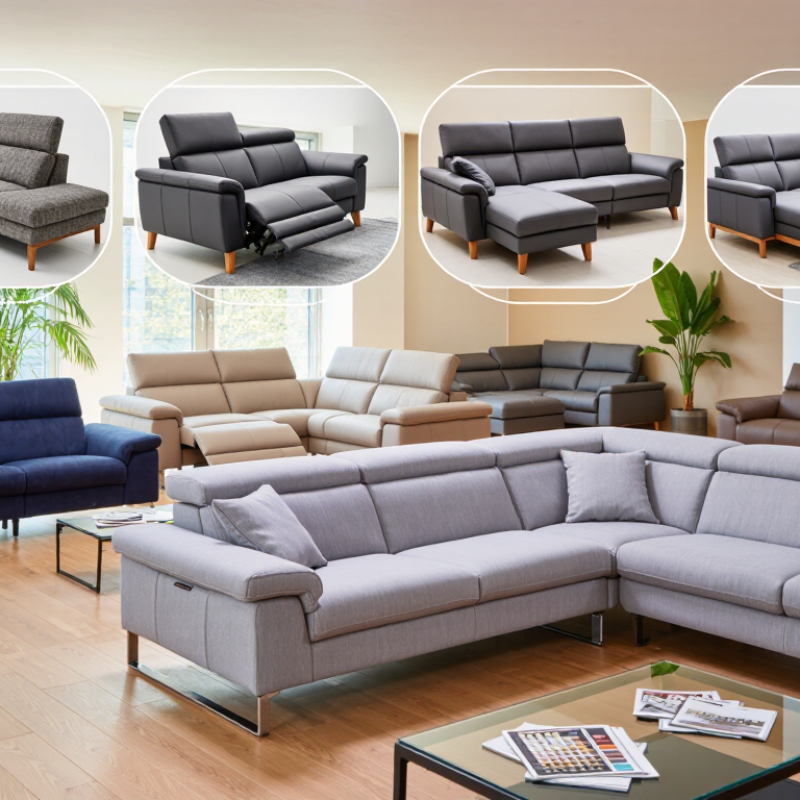
China’s sectional sofa manufacturers commonly offer L-shaped, U-shaped, modular, and chaise-end designs. Modular units are useful when room layouts may change, while fixed-frame sectionals can feel more stable in everyday use. The choice is not always obvious. Grand View Research estimated the global upholstered furniture market at USD 67.7 billion in 2022, reflecting substantial demand across product categories. That figure describes the wider market, not sectional sofas alone.
Materials shape comfort, maintenance, and service life. Buyers can compare kiln-dried hardwood or engineered-wood frames, high-resilience foam, and pocket-spring seating. Upholstery options often include polyester blends, linen-look fabrics, and leather; request abrasion, pilling, and colorfastness test results rather than relying only on swatches. Customization may cover seat depth, firmness, fabric color, chaise direction, removable covers, and built-in storage. Ask for a dimensioned drawing and sample approval before production. A fabric can look perfect under showroom lighting and appear quite different at home. That detail is easy to miss. Global market estimates also cannot confirm any individual factory’s quality, so verify construction specifications and inspection records directly.
Comparing sectional sofa manufacturers in China starts with a clear product brief, not a low headline price. Specify seat depth, frame material, cushion feel, fabric composition, and whether the chaise can switch sides. Ask for a sample or showroom video showing corner joints, underside support, seams, and upholstery under natural light. Small details reveal a lot. Still, a sample cannot fully predict how a large production run will feel.
Quality checks should match the sofa’s intended use. Request written inspection points for frame stability, cushion recovery, stitching, and color consistency across modules. Ask how defects are recorded before packing, and whether finished goods match an approved reference sample. Pricing deserves the same scrutiny. Compare itemized quotes for fabric grade, foam density, packaging, tooling, and spare covers. An unusually cheap offer may omit important details. That is not proof of poor quality, only a reason to ask more.
Export support is more than arranging a shipment. Confirm production lead time, carton dimensions, loading plans, and who prepares export documents. Ask for clear updates when schedules shift; one missed message can complicate warehouse bookings. Request photos of packed modules and labels before dispatch. These checks take time. They also make comparisons fairer, especially when suppliers quote different materials or service levels. A reliable supplier should explain trade-offs plainly, even when the answer is not perfect.
How to read this table: The entries are anonymized supplier profiles, not named or independently verified companies. Figures are indicative screening benchmarks based on common China-made sectional sofa offerings; actual specifications, prices, capacity, and export services vary by order and must be confirmed with suppliers.
| Supplier Profile | Typical Product Focus | Indicative FOB Price per Set (USD) | Indicative MOQ | Typical Production Lead Time | Common Construction Options | Export Support to Confirm |
|---|---|---|---|---|---|---|
| Profile 1 Value-oriented, high-volume |
Modular fabric sectionals; standard configurations | $320–$560 | 20–50 sets per model or fabric | 35–50 days | Engineered wood frame; polyester upholstery; foam seat cushions | Carton packing, commercial invoice, packing list, and loading coordination |
| Profile 2 Mid-range customization |
L-shaped and reversible-chaise sofas | $420–$750 | 20–40 sets | 40–55 days | Solid-wood and plywood frame options; multiple fabric grades; removable covers on selected models | Sample development, labeling, and export-document preparation by arrangement |
| Profile 3 Contemporary design range |
Low-profile sectionals and compact apartment sofas | $450–$820 | 20–50 sets | 40–60 days | Plywood or mixed-material frame; woven fabrics; varied cushion firmness | Pre-shipment inspection access and carton-mark customization to be agreed |
| Profile 4 Leather and upholstery options |
Fabric, synthetic-leather, and selected leather-upholstered models | $550–$1,200+ | 10–30 sets, depending on material | 45–65 days | Reinforced frame options; upholstery grade and leather type affect pricing | Material swatches, origin details, and destination-market requirements should be documented |
| Profile 5 Reclining sofa specialist |
Manual or powered reclining sectionals | $650–$1,400+ | 10–30 sets | 45–70 days | Reclining mechanisms; powered versions require electrical and control specifications | Confirm plug, voltage, test reports, spare-parts policy, and warranty terms for powered models |
| Profile 6 Large-format production |
Standardized sectional ranges for retail and project orders | $380–$780 | 50–100 sets per order | 35–55 days | Repeatable frame and upholstery specifications; configuration-dependent packaging | Container loading plans and shipment scheduling may be available; confirm order capacity |
| Profile 7 Private-label capable |
Custom fabric, size, color, and packaging programs | $450–$950 | 30–100 sets, depending on customization | 45–70 days | Custom dimensions and upholstery; tooling or sample charges may apply | Confirm artwork approval, barcode labeling, packaging tests, and ownership of custom specifications |
| Profile 8 Compact and space-saving |
Small-room sectionals, apartment sofas, and modular units | $300–$620 | 20–50 sets | 35–50 days | Compact frame dimensions; knock-down or modular packing may be offered | Request packed dimensions, gross weight, assembly instructions, and carton drop-test details |
| Profile 9 Premium cushioning and finish |
Higher-spec sectionals with upgraded fabrics and cushion options | $700–$1,500+ | 10–30 sets | 50–75 days | Higher-density foam options, layered cushioning, and more upholstery choices | Agree cushion specifications, fabric performance requirements, inspection criteria, and warranty coverage in writing |
| Profile 10 Export-oriented mixed orders |
Mixed-model container orders for overseas distributors | $400–$900 | 30–80 total sets, subject to model mix | 40–65 days | Model-dependent frame, upholstery, and packaging specifications | Confirm Incoterms, port of loading, booking responsibility, documentation, and shipment tracking process |
Evaluation note: FOB prices are broad indicative ranges, not quotations. Compare suppliers using the same sofa configuration, upholstery, cushion specification, packing method, order quantity, destination requirements, and Incoterm. Request dated quotations, samples, written inspection standards, and evidence for any claimed certifications before placing an order.
Ask about frame materials, joint methods, foam density, suspension, and fabric abrasion data. Specific answers matter.
Ask how fabric, stitching, cushion dimensions, and packing are inspected. Recent records or a workshop walkthrough can help.
Check minimum order quantities, lead times, spare covers, packaging, and responsibility for freight damage. Low prices can hide gaps.
Send a room layout with door widths, lift access, and preferred module sizes. Compare the reply with your measurements.
Common options include L-shaped, U-shaped, modular, and chaise-end designs. Modular pieces suit changing layouts. Fixed frames may feel steadier.
Ask about hardwood or engineered-wood frames, foam, pocket springs, and fabric choices. Request test results, not just swatches.
Confirm seat depth, firmness, fabric color, chaise direction, removable covers, or storage. Review a dimensioned drawing and approve samples.
Showroom colors can shift at home. Check the fabric beside a window, and inspect the finished unit if possible.
No. Broad market figures do not verify an individual factory. Check its construction details and inspection records; I may still miss something.
This article explores China’s sectional sofa manufacturing industry and the factors that make it an important source for a wide range of furniture buyers. It outlines practical criteria for identifying leading manufacturers, including production capabilities, quality-control processes, communication, and experience serving international customers. The profiles of ten manufacturers offer a structured way to compare suppliers without focusing on brand promotion.
Readers will also learn about common Sectional Sofas product types, upholstery and frame materials, and customization options such as sizes, configurations, and finishes. The article concludes with guidance on evaluating product quality, pricing, and export support. By considering these points together, buyers can make more informed supplier comparisons and select a manufacturing partner whose products, services, and capabilities align with their project requirements.