Choosing the right seat affects more than a room’s appearance. It shapes how people rest, read, watch television, and recover after a long day. Recliner Sofas combine generous seating with adjustable support, making them practical for living rooms, media spaces, and smaller family areas. A powered footrest can lift tired legs, while lumbar cushioning can reduce pressure during extended sitting. Still, comfort is personal. A soft cushion may feel welcoming at first, yet offer insufficient support after several hours.
Industry research supports this growing interest. Grand View Research’s home furniture reports identify comfort, multifunctionality, and aging populations as important purchasing influences. Allied Market Research also describes rising demand for reclining furniture, supported by home entertainment habits and changing household needs. These reports offer useful direction, but they do not replace testing a sofa in person. Room dimensions, door widths, fabric durability, and power access still matter. Measure twice.
Furniture analyst Jerry Epperson has said, “The consumer is looking for value, and value is not necessarily the lowest price.” That view fits Recliner Sofas particularly well. Value may mean a stronger frame, quieter mechanisms, washable upholstery, or easier standing support. It does not always mean the largest sofa or the cheapest model. Some recliners also need wall clearance, electrical outlets, and regular mechanism care. That inconvenience deserves honest attention. The best choice balances relaxation, safety, appearance, and long-term use. A useful sofa should feel effortless at 8 p.m., not disappointing six months later.
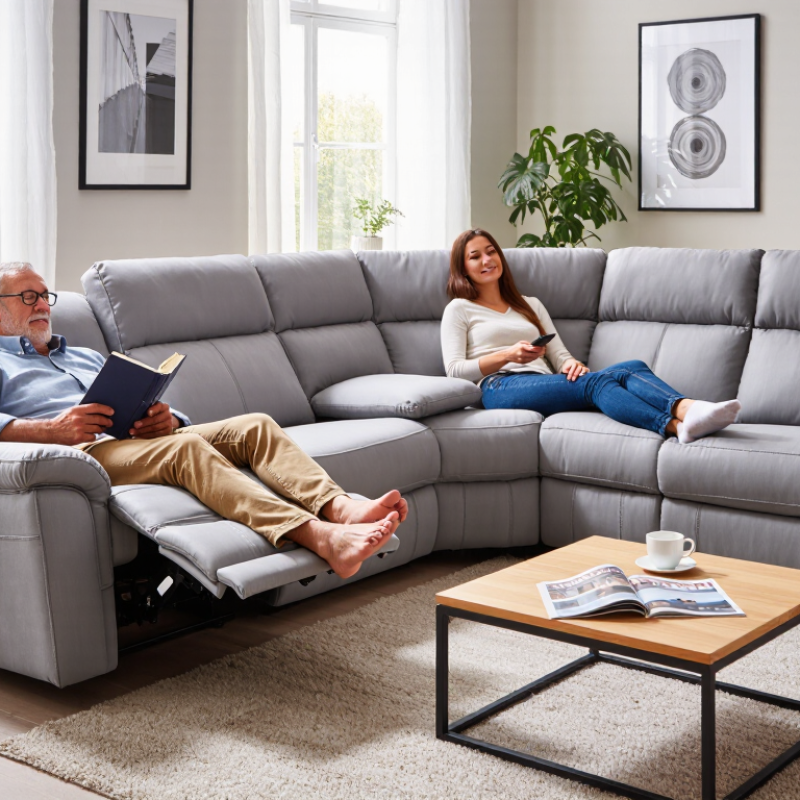
A recliner sofa combines ordinary seating with an adjustable support system. Its backrest tilts backward while a footrest rises beneath the legs. Depending on the design, a side lever, push button, or quiet electric motor controls this movement. Some models adjust the back and footrest together. Others let each section move independently, which helps couples choose different positions.
Inside the sofa, a strong frame supports the seat, while hinges or mechanical brackets guide the moving parts. Electric versions usually include a low-voltage motor and a control panel near the armrest. When the control is released, the movement should stop smoothly. That detail matters. A jerky mechanism may suggest poor alignment, excessive load, or future maintenance trouble.
In a showroom, sit fully back and test the footrest several times. Your lower back should feel supported, not pushed forward. Check whether the headrest meets your height and whether the footrest supports your ankles. Measure the wall clearance before delivery; a reclining sofa needs room behind or beneath its frame. I would not assume a larger sofa feels better. Deep cushions can suit tall users, but shorter people may lose lumbar support. Fabric, moving joints, and electrical controls also need regular inspection. No recliner is perfect, and comfort can change after weeks of use.
| Data Dimension | Typical Information | How It Works or Helps | Important Consideration |
|---|---|---|---|
| Definition | A recliner sofa is upholstered seating with one or more adjustable backrests and footrests. | Users can change the seating angle from an upright position to a more relaxed position. | Recliner sofas are generally deeper and heavier than standard fixed sofas. |
| Common Reclining Mechanisms | Manual lever, pull handle, push-back, or electric motor. | Manual systems use body weight, a lever, or a handle; electric systems use a motor controlled by buttons. | Electric models need access to a suitable power outlet, while manual models do not. |
| Typical Reclining Angle | Approximately 100° to 160° between the seat and backrest | A wider angle can support lounging, reading, watching television, or resting. | The actual range varies according to the design and adjustment system. |
| Footrest Function | Retractable footrest integrated beneath the seat cushion. | Elevates the lower legs and provides additional support while reclining. | The footrest should close fully before the sofa is moved or used as a passageway. |
| Typical Seat Height | Approximately 45–50 cm from the floor | Provides a familiar sitting height for many adults and makes standing easier than from very low seating. | Seat height can differ because of cushion thickness, frame design, and upholstery compression. |
| Typical Seat Depth | Approximately 50–60 cm when measured from the front edge to the back cushion | Offers room to sit upright or relax with the backrest partially reclined. | Deep seats may be less comfortable for shorter users unless the sofa includes suitable lumbar support. |
| Space Needed Behind the Sofa | Wall-hugger designs may need about 5–15 cm; conventional designs may need about 30–45 cm or more | Allows the backrest to move without touching or damaging the wall. | Always check the product’s clearance specification before placing the sofa. |
| Space Needed in Front | Allow approximately 45–75 cm of open space for the extended footrest | Prevents the footrest from blocking walkways or hitting a coffee table. | Measure the fully extended position, not only the sofa’s closed dimensions. |
| Comfort Support | Often includes padded armrests, contoured back cushions, lumbar support, and a supportive seat frame. | Distributes pressure across the back, hips, and legs during extended sitting. | Comfort is personal; users should test the seat depth, cushion firmness, and lumbar position. |
| Electrical Features | Some powered models include independent controls, USB charging ports, or adjustable headrests. | Independent controls allow different users to choose separate seating positions. | USB ports and powered adjustments may require maintenance if the electrical components fail. |
| Space Efficiency | Wall-hugger mechanisms reduce the rear clearance required for reclining. | They can be useful in smaller living rooms or rooms with limited wall space. | The sofa still needs clear space in front and enough room for safe movement around it. |
| Accessibility Benefit | Supportive armrests and a moderate seat height can make sitting down and standing up easier. | The reclining position may reduce pressure on the lower back and help users rest their legs. | People with specific mobility or medical needs should choose furniture with professional guidance. |
| Cleaning and Maintenance | Routine care usually includes vacuuming upholstery, treating spills promptly, and checking moving parts. | Regular maintenance helps preserve fabric, leather, cushions, and mechanical components. | Use cleaning products recommended for the upholstery material and avoid forcing the mechanism. |
| Best Use Cases | Living rooms, media rooms, reading areas, and shared relaxation spaces. | Provides adjustable support for watching television, reading, resting, or socializing. | Confirm that the room layout, doorway width, and floor area can accommodate delivery and operation. |
| Key Buying Checklist | Measure the room, doorway, and elevator; test the seat; compare manual and electric operation; inspect upholstery and frame quality. | Matching the sofa to the room and the user improves comfort, safety, and long-term usability. | Dimensions and features differ by model, so verify the manufacturer’s specification sheet before purchase. |
A recliner sofa combines normal seating with adjustable back and leg support. Its backrest tilts while a footrest rises beneath your legs. Controls may include a lever, button, or electric motor. Some sections move independently. Others move together.
A strong frame supports the seat and moving parts. Hinges or brackets guide the reclining motion. Electric models usually use a low-voltage motor and armrest controls. The movement should stop smoothly when released. Jerky motion may indicate alignment or maintenance problems.
Sit fully back and operate the footrest several times. Check your lower-back support and headrest height. Your ankles should rest comfortably on the footrest. Listen for unusual noise. Test it again.
Measure its full reclining depth, not only its closed width. Leave clear space around footrests, walls, tables, and doorways. A walking path of about 60 centimeters works well where possible. Measure twice. A beautiful layout can still fail in daily use.
Yes, especially a wall-hugging design. It can provide seating, reading space, and occasional rest in one unit. Check clearance behind and beneath the frame. Keep furniture away from the moving footrest. I once blocked a walkway and regretted it.
Adjustable headrests can support reading or television viewing. Lumbar support may help during longer sitting periods. Power reclining offers smoother adjustments for people with limited hand strength. Clear buttons and a manual release add practical value. Comfort remains personal.
Review the weight rating and frame construction. Check fabric cleaning instructions before purchase. Removable covers help in homes with children or pets. Keep cables organized, especially near USB ports. Inspect fabric, joints, and controls regularly.
A lift-recline model may make standing easier. It should still feel stable and supportive. People with mobility concerns may benefit from professional advice. Heat and massage can feel pleasant, but they are optional comforts. They are not guaranteed solutions.
Recliner Sofas combine the support of a traditional sofa with an adjustable reclining mechanism that allows users to change the angle of the backrest and footrest. This flexibility can provide personalized comfort while reading, watching television, relaxing, or taking a short rest. By helping the body find a more supported position, a recliner sofa may also reduce pressure on the back, legs, and joints, especially when used with suitable posture.
Different features can meet different household needs, including manual or powered adjustment, built-in storage, cup holders, adjustable headrests, and compact designs for smaller rooms. Recliner Sofas can improve space use by combining seating and relaxation functions in one piece of furniture, while their materials, colors, and shapes can complement various interior styles. Before buying, consider the sofa’s size, reclining clearance, durability, maintenance requirements, comfort, operating method, and whether it fits the room layout and the needs of everyone who will use it.