2026 Best Motion Sofas for Global Buyers

Time:2026-10-24 Author:Amelia
0%

Choosing the right Motion Sofas in 2026 requires more than comparing colors, prices, and promotional claims. Global buyers need dependable comfort, suitable technology, and clear after-sales support.

A well-designed sofa should move smoothly without sudden jolts or excessive motor noise. Test the reclining angle, seat depth, lumbar support, and footrest extension before making a decision. Measure doorways, elevators, staircases, and the final room carefully. A beautiful sofa is useless if delivery stops outside the building.

Materials also matter. Performance leather can resist daily spills, while breathable fabric may suit warmer climates better. Solid frames, reinforced joints, and tested motors can improve long-term reliability. Buyers should request load ratings, electrical specifications, warranty terms, and replacement-part information. Regional voltage compatibility deserves attention, especially when purchasing from overseas suppliers. Small details often become expensive problems.

The best options balance comfort, durability, design, and practical ownership. Some models offer app controls, USB charging, heat, or massage functions. These features sound impressive, but convenience should not replace structural quality. A remote may fail. Motors may need service. That reality matters.

This guide examines leading Motion Sofas for international buyers, using practical criteria rather than showroom language. It considers construction, user experience, maintenance, shipping readiness, and manufacturer credibility. Independent reviews and transparent product documentation can strengthen confidence, although no ranking is perfect. Personal comfort remains subjective, and even expert testing has limits. Use this guide as a careful starting point, not an automatic answer.
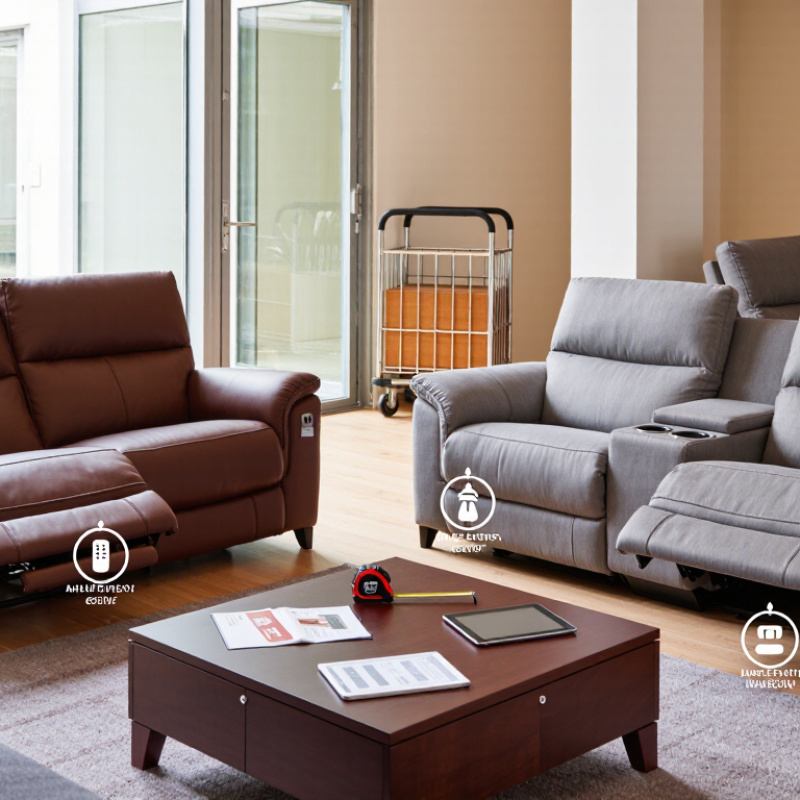
2026 Best Motion Sofas for Global Buyers

Motion Sofa Basics: Reclining Types, Motors, Materials, and Core Functions

For global buyers, a motion sofa should match room size, user habits, and local electrical conditions. Start with the reclining mechanism. Wall-hugger models move forward while reclining, so they suit narrow rooms. Zero-gravity designs raise the legs and support a flatter resting posture. Lift models assist users who need easier standing. Test the footrest gap carefully. It can affect comfort.

Motor quality matters daily. Single-motor systems usually control the backrest and footrest together. Dual-motor systems adjust them independently, giving better posture control. Check movement noise, speed, warranty terms, and expected duty cycles. Voltage, plug type, and adapter certification also require attention in international shipments. A quiet motor feels premium. A slow return may feel safer.

Materials change both appearance and maintenance. Top-grain leather develops character, but it needs regular conditioning. Coated leather is easier to clean, although surface cracking may appear sooner in dry climates. Performance fabric handles family use well and feels less cold. Look for kiln-dried hardwood or reinforced metal frames, dense foam, and even stitching. Core functions may include adjustable headrests, lumbar support, USB charging, memory positions, heat, and reading lights. More functions are not always better. Sitting for ten minutes cannot reveal every weakness. I would request load testing, carton dimensions, spare-part access, and clear care instructions before ordering. A perfect sofa rarely exists.

2026 Best Motion Sofas for Global Buyers

Motion Sofa Basics: Reclining Types, Motors, Materials, and Core Functions

Motor count generally indicates how many movement functions can be adjusted independently. Manual recliners use no motor, while single-motor systems commonly operate the footrest and backrest together. Dual-motor designs separate these movements, and additional motors may control power headrests or lumbar support.

Reclining Types
Manual, single-motor, dual-motor, and multi-motor configurations serve different comfort and control requirements.
Common Materials
Leather, leather-match, polyester fabric, microfiber, and performance upholstery are widely used for motion sofa coverings.
Core Functions
Typical functions include footrest extension, backrest adjustment, power headrest, USB charging, and optional lumbar adjustment.

2026 Market Snapshot: Global Growth and Regional Demand (Grand View Research)

2026 Best Motion Sofas for Global Buyers

2026 Market Snapshot: Global Growth and Regional Demand (Grand View Research)

The global motion sofa market is expanding as households seek comfort, flexible seating, and better use of limited space. Grand View Research identifies continued growth, supported by rising home improvement spending and changing lifestyles. Demand is not identical everywhere. North American buyers often prefer spacious recliners, powered headrests, and durable upholstery. European households may favor compact frames that fit smaller apartments. In Asia-Pacific markets, multifunctional designs can attract buyers with limited living areas.

A useful motion sofa should feel practical before it feels impressive. Test the reclining angle, motor noise, and footrest movement. A quiet motor matters in open-plan homes. Measure doorways carefully. A large sofa may not pass through a narrow lift. Buyers should also check voltage compatibility, plug requirements, warranty terms, and replacement-part access. These details can affect ownership more than decorative stitching.

Material choice reflects local habits. Performance fabric suits busy homes, while leather-like surfaces may simplify cleaning. However, heat, humidity, and sunlight can change comfort and durability. I have found that shoppers sometimes focus too heavily on visible features. That can be a costly mistake. Frame strength, foam recovery, and service response deserve equal attention. Regional logistics remain uneven, so delivery damage and installation support should be discussed before payment. Growth looks promising, but global buyers still need careful, market-specific judgment.

Safety Standards: UL 962, IEC 60335, and BIFMA Durability Testing

For global buyers choosing motion sofas in 2026, safety documentation deserves close attention. UL 962 evaluates powered household and commercial furnishings, including electrical components and operating risks. Buyers should check the exact product scope, not rely on a familiar-looking mark. A motor should stop smoothly, wiring should remain protected, and moving gaps should reduce finger-trap hazards.

IEC 60335 provides a broader framework for electrical appliance safety. Relevant requirements may address insulation, overheating, abnormal operation, and accessible parts. Testing should reflect the sofa’s voltage, plug system, and intended market. Ask for current reports, model numbers, and test conditions. A certificate without matching product details proves little.

BIFMA durability testing adds a practical furniture perspective. Repeated reclining cycles, load application, frame stress, and seat fatigue can reveal weaknesses that electrical testing misses. During evaluation, inspect loosened bolts, uneven movement, noisy actuators, and fabric strain. Small defects matter. A sofa may pass one test and still disappoint in daily use. Test methods also vary, so compare procedures rather than scores alone. Buyers should request traceable laboratory records and clear maintenance instructions. The honest gap is this: no standard predicts every home, climate, user weight, or installation mistake. Good sourcing combines recognized testing with hands-on inspection and cautious judgment.

Buyer Criteria: Load Capacity, Recline Angles, Power Use, and Warranty Terms

2026 Best Motion Sofas for Global Buyers

For global buyers, the 2026 best motion sofa is not simply the softest model. It must match household use, room dimensions, and regional electrical conditions. Check the tested load capacity per seat, not only the frame rating. A sofa rated for 150 kilograms may perform differently with the footrest extended. Ask for test methods, safety margins, and cycle counts. Measure wall clearance at the maximum recline angle. A few centimeters can prevent costly returns. In practical product evaluations, quiet movement and stable leg support matter more than showroom appearance. Still, comfort testing remains subjective.

Recline angles need precise attention. A 110-degree position may suit reading, while 135 degrees supports longer rest. Confirm whether the angle describes the backrest or the complete seat. Power use also varies with motor count, standby design, and daily cycles. Request rated voltage, wattage, and plug options for your destination. A 24-volt adapter may be efficient, but replacement availability matters. Calculate monthly energy use using local electricity tariffs. Marketing estimates can be optimistic.

Tips: Request written warranty terms before ordering. Check coverage for motors, control boxes, frames, upholstery, and labor. Note separate warranty periods for each component. Ask whether international shipping covers replacement parts. Confirm who pays return freight and how claims are documented. Keep installation photos and serial records. I would also request a sample inspection report, although some suppliers may resist. That hesitation is useful evidence, not proof of poor quality.

Regional Buying Guide: Voltage, Certifications, Shipping, and After-Sales Support

2026 Best Motion Sofas for Global Buyers

Regional buying decisions begin with voltage, not upholstery. North America commonly uses 120V/60Hz, while much of Europe and Asia uses 220–240V/50Hz. A plug adapter changes the connection only. It does not convert voltage. Buyers should request motor input labels, wiring diagrams, and thermal protection details before placing a container order. IEC 60335-1 provides a widely used safety framework for household electrical appliances, but local approval still matters.

Certification documents must match the destination market. European shipments may require CE-related compliance, while other regions can require national electrical testing, radio rules, or chemical declarations. Ask for test reports, declarations of conformity, and production inspection records. Paperwork can look complete and still hide an expired report. That happens.

Shipping needs practical planning. UNCTAD reports that over 80% of global merchandise trade by volume moves by sea. A motion sofa with reclined mechanisms needs stronger corner protection, moisture barriers, and clear carton measurements. The World Bank’s 2023 Logistics Performance Index assesses customs, infrastructure, shipment quality, and timeliness. These factors affect delivery more than a low freight quote. Confirm port handling, damage claims, spare-parts packing, and installation instructions in writing. After-sales support should include remote diagnosis, replacement motors, control boxes, and local service contacts. A 12-month warranty sounds useful, but response time and parts availability matter more. Temperature, dust, and uneven flooring may also shorten motor life, which many buying guides understate.

2026 Best Motion Sofas for Global Buyers - Regional Buying Guide: Voltage, Certifications, Shipping, and After-Sales Support

Region / Key Markets Mains Voltage & Frequency Common Plug Types Recommended Motion Sofa Electrical Setup Typical Regulatory Requirements Suggested Product Documents Indicative Ocean Transit Time* After-Sales Priorities
United States & Canada
North America
United States: 120 V, 60 Hz
Canada: 120 V, 60 Hz
Type A and Type B 120 V-compatible power supply; UL/CSA-recognized components are preferred for the electrical assembly. Confirm plug configuration by destination. United States: applicable FCC requirements for electronic controls and relevant electrical safety requirements.
Canada: applicable Canadian electrical safety requirements and bilingual labeling where required.
Electrical test report, user manual, installation instructions, wiring diagram, material declaration, and country-of-origin documents. Approximately 20–40 days from major Asian ports, depending on destination, routing, and customs clearance. Spare power supplies, control switches, motors, cables, and replacement upholstery panels; remote troubleshooting and clear warranty terms.
European Union & EEA
Western, Southern, Central and Northern Europe
Generally 220–240 V, 50 Hz
Country-level variations should be checked before shipment.
Type C, E, and F are common 220–240 V-compatible external adapter or power supply; use the correct plug for the destination country. Low-voltage motors can simplify product safety management. CE marking where applicable, EMC compliance, RoHS, REACH-related substance obligations, General Product Safety requirements, and EU textile or furniture labeling rules where applicable. EU Declaration of Conformity, technical file, EMC and electrical safety test reports, RoHS/REACH declarations, care label, and multilingual manual. Approximately 25–45 days from major Asian ports, subject to port congestion and inland delivery. Multilingual instructions, EU-based service options where possible, replaceable actuators, modular control boxes, and documented spare-parts availability.
United Kingdom & Ireland
British Isles
United Kingdom: 230 V, 50 Hz
Ireland: 230 V, 50 Hz
Type G in the United Kingdom and Ireland 230 V-compatible power supply with Type G plug; provide separate documentation and labeling for United Kingdom and European Union shipments. United Kingdom product safety, EMC, RoHS, and applicable furniture and fire-safety requirements; Ireland generally follows EU product requirements. United Kingdom Declaration of Conformity where required, test reports, technical documentation, English manual, fire-safety information, and import records. Approximately 25–45 days from Asian ports, plus customs and inland delivery time. English-language support, local plug and fuse compatibility, clear return procedure, and stock of motors, adapters, remotes, and cables.
Australia & New Zealand
Oceania
Australia: 230 V, 50 Hz
New Zealand: 230 V, 50 Hz
Type I 230 V-compatible power supply with Type I plug; verify local electrical approval requirements before commercial import. Australia and New Zealand electrical equipment requirements may apply; electromagnetic compatibility, product safety, labeling, and furniture flammability rules should be assessed for the final configuration. Electrical safety and EMC reports, supplier declaration, product specifications, English manual, material and flammability information, and traceability records. Approximately 20–35 days from Asian ports, excluding customs and local delivery. High priority for replacement parts because of distance; maintain regional inventory of power supplies, actuators, hand controls, and connection cables.
Japan
East Asia
100 V, 50 or 60 Hz depending on region Type A and Type B Use a power supply specifically rated for 100 V and confirm compatibility with both 50 Hz and 60 Hz areas where applicable. Japanese electrical product requirements, PSE assessment or marking where the supplied electrical components fall within applicable categories, EMC requirements, and Japanese labeling obligations. Japanese-language manual, electrical specifications, PSE-related documentation where applicable, safety warnings, inspection records, and replacement-part list. Approximately 10–25 days from nearby Asian ports, subject to port and inland handling. Japanese-language support, precise installation instructions, compact spare-parts packaging, and confirmation of 50/60 Hz operating compatibility.
South Korea
East Asia
220 V, 60 Hz Type C and Type F are common 220 V/60 Hz-compatible power supply and the correct round-pin plug configuration. Korean electrical and product safety requirements, EMC requirements, energy or standby-power rules where applicable, and Korean-language labeling. Korean-language manual, electrical safety and EMC reports, conformity documentation, labeling artwork, and service-parts catalog. Approximately 10–25 days from Asian ports, depending on port pair and delivery location. Local-language support, parts compatibility confirmation, and fast replacement of control units and power supplies.
China
Mainland domestic market
220 V, 50 Hz Type A, Type C, and Type I may be encountered; confirm the final installation location. 220 V/50 Hz-compatible power supply, local plug, and Chinese-language safety instructions for domestic distribution. Applicable Chinese product quality, electrical safety, EMC, labeling, and furniture requirements; certification needs depend on the product configuration and sales channel. Chinese manual, inspection report, material declaration, electrical test records, traceability information, and packaging labels. Domestic trucking or rail: commonly 3–15 days; export ocean schedules vary by destination. Domestic service coverage, warehouse stock of standard motors and controls, installation support, and a documented product serial-number system.
Middle East
Gulf and nearby markets
Commonly 220–240 V, 50 Hz
Confirm requirements for each country.
Type G is widely used in Gulf markets; Type C and other configurations may also occur. 220–240 V/50 Hz-compatible power supply; provide the exact local plug and consider heat-resistant packaging and storage instructions. Country-specific conformity, import, labeling, electrical safety, EMC, and fire-safety requirements; requirements can differ significantly between markets. Commercial invoice, packing list, certificate of origin, conformity documents, electrical reports, Arabic/English labeling where required, and warranty statement. Approximately 20–40 days from Asian ports, depending on transshipment, destination port, and customs procedures. Heat and dust protection, local-language support where required, replacement adapter stock, and clearly defined service responsibility after installation.
Latin America
Mexico, Brazil, Chile, Colombia and neighboring markets
Varies by country: commonly 110–127 V or 220–240 V; frequency is generally 50 or 60 Hz. Type A, B, C, and N may be encountered depending on country. Use a country-specific power supply and plug. Do not assume that one voltage configuration covers the whole region. National certification, customs, labeling, electrical safety, EMC, and furniture requirements vary by country; Brazil and Mexico, for example, may require market-specific conformity procedures. Spanish or Portuguese manual as applicable, certificate of origin, commercial invoice, packing list, local conformity records, electrical reports, and warranty terms. Approximately 25–50 days from Asian ports, depending on destination, transshipment, and customs clearance. Spanish/Portuguese support, local repair partners, voltage confirmation before order acceptance, and regional spare-parts stocking.
South Africa
Southern Africa
230 V, 50 Hz Type D, Type M, and Type N may be encountered; confirm the installation site. 230 V/50 Hz-compatible power supply and locally accepted plug configuration; provide an adapter only when permitted and safe for the installation. South African electrical safety, EMC, import, labeling, and furniture requirements should be checked for the final product and sales route. English manual, electrical test reports, conformity documents, certificate of origin, import paperwork, and replacement-parts list. Approximately 25–50 days from Asian ports, subject to routing and inland delivery. Surge-protection guidance, robust packaging, regional repair capability, and availability of motors, adapters, control switches, and cables.
Buyer verification notes: Voltage, plug configuration, certification scope, labeling, furniture flammability rules, customs documents, and import requirements must be confirmed for the exact destination country and final sofa configuration. Ocean transit times are indicative estimates and exclude production, port congestion, customs clearance, and inland delivery. A motion sofa’s internal motor voltage may differ from the building’s mains voltage because it commonly uses an external power supply; always verify the rating label before connection.

FAQS

Why is the global motion sofa market growing in 2026?

Households want comfort, flexible seating, and better use of limited space. Home improvement spending also supports demand. Needs differ by region.

What should I measure before ordering a motion sofa?

Measure the room, doorway, hallway, lift, and stair turns. A large sofa may not pass through a narrow lift. I might measure the room and forget the delivery route.

Which motion features deserve practical testing?

Test the reclining angle, motor noise, footrest movement, and stopping action. Quiet movement suits open-plan homes. Smooth operation matters more than decorative details.

Which sofa materials work well in different homes?

Performance fabric suits busy households. Leather-like surfaces can simplify cleaning. Heat, humidity, and sunlight may change comfort and durability.

What electrical safety documents should global buyers request?

Request current reports matching the exact model, voltage, plug system, and intended market. Check insulation, overheating protection, wiring, and moving gaps. A familiar mark proves little.

What does furniture durability testing usually examine?

It may examine repeated reclining cycles, frame stress, load pressure, and seat fatigue. Inspect loose bolts, uneven movement, noisy actuators, and strained fabric. Small defects matter.

Do regional preferences affect motion sofa selection?

North American buyers often prefer spacious recliners and powered headrests. European homes may need compact frames. Asia-Pacific buyers may value multifunctional designs.

What service details should I confirm before payment?

Confirm warranty coverage, replacement-part access, installation support, and delivery-damage procedures. Regional logistics can be uneven. Discuss these details early.

Can safety testing predict every ownership problem?

No testing method covers every climate, user weight, home layout, or installation mistake. Combine recognized testing with hands-on inspection. I may still underestimate daily wear.

Conclusion

This guide to Motion Sofas helps global buyers understand the key features, construction, and purchasing considerations shaping the 2026 market. It explains major reclining types, motor systems, upholstery materials, and core functions such as independent headrest, footrest, and lumbar adjustment. It also reviews global growth trends and regional demand, highlighting how comfort, home entertainment, space efficiency, and smart power functions influence consumer preferences.

The article outlines essential safety and durability considerations, including relevant electrical safety principles, furniture performance testing, load capacity, recline angles, power consumption, and warranty terms. A practical regional buying guide covers voltage compatibility, required certifications, shipping conditions, installation, spare parts, and after-sales support. By comparing technical specifications and service expectations across markets, buyers can select Motion Sofas that provide reliable performance, suitable comfort, and long-term value while meeting local safety and purchasing requirements.

Amelia

Amelia

Amelia is a seasoned marketing professional with a wealth of expertise in our company’s core offerings. With an unwavering passion for driving growth and innovation, she plays a pivotal role in shaping our marketing strategies and enhancing brand visibility. A key aspect of her responsibilities......